How to Generate Leads for Business: Complete Guide for 2026
Master the art of lead generation in 2026. Learn how to build a scalable system using SEO, Paid Ads, and Content Marketing for consistent business growth.
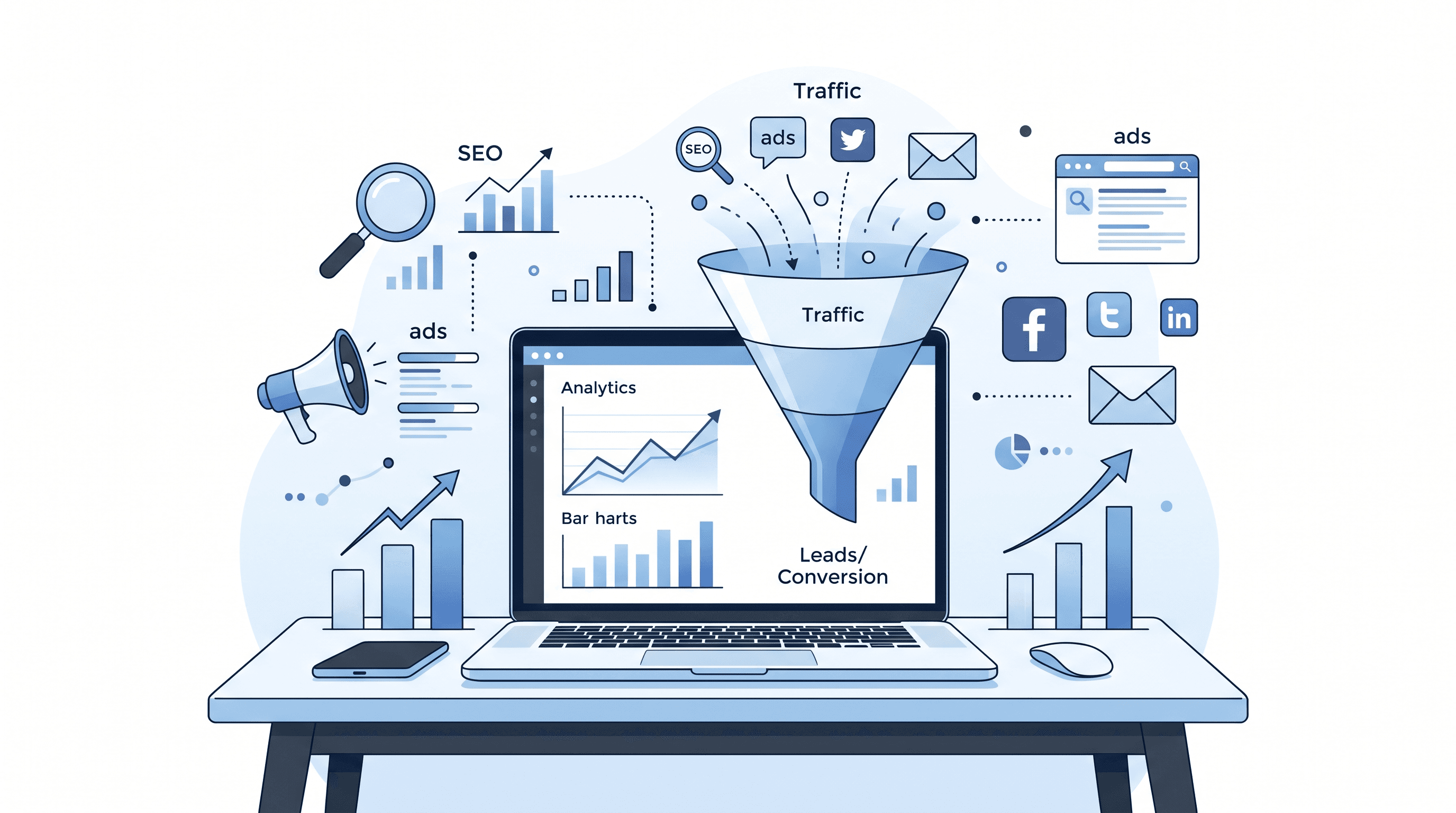
Every business needs leads to grow. But the real challenge is not getting leads once. The real challenge is generating qualified leads consistently.
Many businesses face a common problem. Some days they get many inquiries, and some days they get nothing. This makes sales unpredictable and business growth difficult.
The difference between struggling businesses and growing businesses is simple: successful businesses build a lead generation system.
What is Lead Generation?
Lead generation is the process of attracting people who may be interested in your product or service and collecting their contact details so your sales team can follow up with them.
Lead Generation Flow
Traffic
SEO, Ads, Social Media
Interest
User clicks or reads
Lead
Form, call, WhatsApp
A lead is not always a buyer immediately. A lead is a person who has shown interest in your business.
Filling a Form
The user submits name, phone number, email, or requirement.
Calling Your Business
The user directly contacts your team for information or pricing.
WhatsApp Message
The user sends a message asking about your service.
Clicking an Ad
The user clicks your Google, Meta, or YouTube advertisement.
Downloading a Guide
The user gives contact details in exchange for useful content.
Asking for Pricing
The user is closer to purchase and wants cost details.
Important:
The goal of lead generation is not just getting form submited or shown intrest. The goal is qualified interest or buying intention from people who can become customers.
Why Lead Generation Systems Matter
Without a proper system, businesses depend only on referrals, luck, or random social media posting. A system makes marketing measurable and scalable.
| Area | Without Lead System | With Lead System |
|---|---|---|
| Revenue | Unpredictable | Consistent and forecastable |
| Marketing | Random posting and ads | Planned campaigns |
| Tracking | No clear data | Data-driven decisions |
| Growth | Difficult to scale | Easy to improve and scale |
Types of Leads
Not every lead has the same buying intent. Some people are just learning, some are comparing options, and some are ready to buy.
Cold Leads
These people do not know your business yet.
Best Strategy: Educate them with content.
Warm Leads
These people are interested but not ready to buy immediately.
Best Strategy: Share case studies and offers.
Hot Leads
These people are ready to take action now.
Best Strategy: Call quickly and close the deal.
The 2026 Lead Generation Funnel
A lead generation funnel shows the journey from first contact to final sale.
1. Attract
Bring people through SEO, paid ads, social media, and referrals.
2. Engage
Build interest with helpful content, videos, blogs, and offers.
3. Capture
Collect name, phone number, email, requirement, or WhatsApp inquiry.
4. Nurture
Follow up through calls, WhatsApp, email, remarketing, or CRM.
5. Convert
Turn the qualified lead into a paying customer.
How to Generate Leads Online
Online lead generation is powerful because it is measurable. You can track traffic, clicks, form submissions, calls, cost per lead, and conversion rate.
Search Engine Optimization
SEO helps your website appear on Google when people search for your product or service. It is slow but powerful for long-term growth.
Google Ads
Google Ads works best for high-intent users who are already searching for a solution, service, or price.
Meta Ads
Meta Ads are useful for Facebook and Instagram lead generation, awareness, retargeting, and offer-based campaigns.
Content Marketing
Blogs, reels, videos, guides, and case studies help build trust before the customer speaks to your sales team.
Comparison of Lead Generation Channels
| Channel | Lead Quality | Speed | Best Use Case |
|---|---|---|---|
| SEO | High | Slow | Long-term authority and free traffic |
| Google Ads | Very High | Fast | High-intent leads and quick results |
| Meta Ads | Medium to High | Fast | Awareness, retargeting, and lead forms |
| YouTube Ads | Medium | Medium | Trust building and video explanation |
Free vs Paid Lead Generation
| Type | Advantages | Limitations | Examples |
|---|---|---|---|
| Free | Low cost, builds long-term trust | Takes time and consistency | SEO, blogs, reels, referrals |
| Paid | Fast results and scalable | Needs budget and tracking | Google Ads, Meta Ads, YouTube Ads |
Importance of a Landing Page
A landing page is a focused page created for one offer. It should not distract the visitor. Its main purpose is to convert the visitor into a lead.
High-Converting Landing Page Structure
Common Lead Generation Mistakes
1. Sending Ad Traffic to Homepage
Your homepage has too many distractions. Always send ad traffic to a dedicated landing page.
2. Slow Follow-Up
If your team calls after many hours, the lead may lose interest or contact your competitor.
3. Targeting Everyone
If you target everyone, your message becomes weak. Define your ideal customer clearly.
Lead Generation Checklist
Clear offer for the customer
Fast and focused landing page
Simple form or WhatsApp button
Google Analytics and Meta Pixel tracking
CRM or lead sheet for records
Quick follow-up process
Conclusion
Lead generation is not about running random ads or posting content without strategy. It is about building a system that attracts the right audience, captures their interest, follows up properly, and converts them into customers.
Start simple. Choose one channel, create one strong offer, build one landing page, and track every lead. Once it works, scale it.